A blog launched on the 41st anniversary of the Society for the Protection of Unborn Children (SPUC), the first pro-life organisation in the world, established on 11 January 1967. I wrote this blog in my role as SPUC's chief executive, commenting on pro-life news, reflecting on pro-life issues and promoting SPUC's work. I retired from my post on 31st August 2021 and will therefore be adding no further posts.
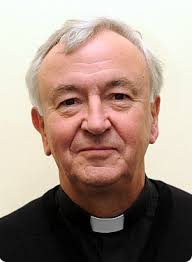
Monsignor Ignacio Carrasco (pictured), the new president of the Pontifical Academy for Life, has hit the nail on the head again on abortion. Two weeks ago I reported on his significant interview with Zenit in which he said there was no scientific case for abortion.
Monsignor Carrasco says today that the new Spanish law on abortion is "an expression of the incapacity to understand what a right is. The problem is serious, not only in Spain".
In the minimum number of words, he sums up the challenge we face in Britain where David Cameron and Andrew Lansley, the new health secretary, have made clear their support for wider access to abortion, under their guise of support for reducing the upper time-limit for social abortions; and where just two days ago, the Coalition government announced plans to step up abortions on the poor in the developing world.
Monsignor Carrasco sums up the problem at the Human Rights Council in Geneva where the Holy See and SPUC have been challenging an extreme, "ideologically driven" pro-abortion report promoting a so-called "right to abortion".
And he sums up the problem in the US where the Obama administration are demonstrating their determination to promote the legalization of abortion worldwide.
Thank God, I say, for churchmen like Monsignor Carrasco who are standing up for unborn babies and their mothers. And thank God for the politicians of all faiths in Northern Ireland and elsewhere in the world who are signing up to an Amnesty for Babies petition which calls on the international community to recognize its responsibilities under international agreements to:
"ensure to the maximum extent possible the survival and development of the child before as well as after birth"
and to
"adopt all measures necessary to protect adequately human life and dignity in the application of life sciences".
Such churchmen and such politicians send out a shining light in a dark world.
Yesterday the Telegraph carried the remarkable story that people with so-called "locked-in syndrome" may be able to drive wheelchairs and surf the internet by breathing.
The Telegraph reports:
"Scientists at the Weizmann Institute of Science in Rehovot, Israel, have created a 'sniff detector' that is able to pick up pressure changes in the wearer's nasal cavity and convert it into electrical signals.
"The device can then be hooked up to special software and used to move a cursor on a computer screen or control a wheelchair.
"One patient, a 51-year-old woman who was left unable to move, speak or blink after a stroke, was able to communicate for the first time using the new technology.
"After 19 days learning to produce a sniff on demand with 20 minutes of practice a day, she was able to write her family a message for the first time. To this day, the 'sniff detector' remains her only means of expressing herself.
"Another man, who had been 'locked in' for 18 years following a car accident, wrote his own name within 20 minutes of using the device."
I wrote last November about how the case of Rom Houben (pictured), who was misdiagnosed for 23 years as being in a coma-like state, challenges the pro-euthanasia mentality which exists regarding severely incapacitated patients. Rom also had 'locked-in syndrome' and was always consciously aware.
What Janet Thomas, of No Less Human, said about the case of Rom Houben, is entirely applicable to yesterday's story in the Telegraph:
"This case highlights the huge dangers in assessing profoundly disabled people as having lives not worth living. Surely, with all the medical resources at our disposal, a truly civilised society would be concentrating on saving and improving life, not terminating it ... Following the 1992 Bland judgment, and under the Mental Capacity Act and related professional guidance, such patients are in danger of being dehydrated to death."
Indeed so. Parliamentarians need urgently to turn their attention to the tragic consequences of the Mental Capacity Act.
When I was in Rome, earlier this month, I met Hilary White, the well-known writer for LifeSiteNews.com
Hilary describes herself on her blog as "an Anglo-Canadian writer, researcher and art student recently re-assigned by God to Rome and desperately sand-bagging in sight of the coming flood".
The pro-life movement is, thankfully, made up of people of all faiths and none. Hilary, on the other hand, who's a prominent person in the pro-life movement, is unreservedly and forthrightly Catholic. Her answer to my first question reflects her distinctive position.
I asked Hilary: “What is the significance of the Catholic Church to the pro-life movement?” She replied:
"It is difficult to think how to answer that question. Not because it is hard to think of ways in which the Catholic Church has an impact on the movement, but in the way that it is difficult to, say, quantify the significance of water for the existence of life on planet earth.
"I’m being glib, but not inaccurate. While we like to say that the pro-life position can be apprehended and held by anyone with any religious affiliation or none, the reality is that in practice, there are certain factors that, shall we say, mitigate strongly against atheism or even simple modern secular irreligion allowing the pro-life position, at least in its fullness.
"There are things about being a Catholic that make it possible (though never easy) to stand against the whole tide of the world and refuse to sway. It is this absolutist stand that so infuriates the world. Why are the world’s media so doggedly pursuing the Catholic Church on the sex abuse scandals? Why only the Church when there are assuredly whole oceans of fish to fry in the Anglican, Lutheran and Baptist communities? Or for that matter, among teachers, scout leaders and librarians?
"It is because the Catholic religion proposes absolute and unchangeable teachings on life, the universe and everything, and claims for them the infallible authority of God. Catholics grasp the concept that truth is simply what it is, and no amount of 'consensus', 'social progress', or committee-think will change it. It is why Catholics laugh (though somewhat darkly) when media experts demand that the pope change the teachings on homosexuality or abortion or contraception to become accepted by the modern world. The World cannot grasp, no longer has the intellectual capability to grasp, that the Catholic Church presents the truths of religion in the same way as a mathematician presents a mathematical axiom.
"This is the secret of the martyrs. It is not, I guess, that martyrs have some great personal well of strength to endure torture. It is simply that the truth of the Faith is unalterable. It cannot be denied any more than gravity can be denied. We merely shrug in the face of these demands. The axioms of the mathematicians are less certain. It is not within our power to deny. Easier to ask us to fly.
"I have known for some time that there is a deficiency of education within the pro-life movement. There are a lot of sincere and often hard-working people who are, or believe themselves to be, pro-life but who hold the position without a concrete understanding of why. With feeling and sincerity, but with little knowledge.
"I hope your readers will forgive me for the criticism, but there is a strong streak of sentimentality in the movement that is little use in answering in a sensible way the questions and demands of the abortionist world. We cannot expect to win this war on feelings, on a vaguely held notion that babies are cute and that the world will automatically default back to sanity if we can only overturn Roe v. Wade.
"Feelings are easily swayed, as we have seen with the push for legalised euthanasia and assisted suicide in Britain. The media are the master manipulators and can have us cheering for a woman who kills her daughter out of “compassion”. Or at least weeping in sympathy and begging the courts for leniency. Feelings are swayed when they are not under the control and supervision of an informed intellect and will (a Catholic concept, BTW).
"What is missing in the pro-life world is solid education, intellectual training in logic and critical thinking skills as well as the facts. Many are hampered by their ignorance of the dots and lack of training in drawing lines between them. I have met too many nice pro-life people who cannot defend their position in the face of emotive arguments or slogans. 'But what about rape?' demands the abortionist world, and many nice friendly pro-lifers are stymied.
"Liking cute babies is not enough.
"Where the Catholic Church comes in for educational purposes is to provide these robust, intellectually rigorous answers to the abortion movement’s political slogans and their (occasionally) honest questions. Catholicism is not a religion of sentimentality.
"Why is IVF a bad thing? What is the pro-life position on embryonic genetic research? ... Why isn’t there such a thing as a right to commit suicide? Why is it wrong to use donor sperm? Why can we not 'adopt' frozen embryos? Why is rape not a legitimate 'exception' for abortion? What is the moral difference between removal or withholding of 'extreme' medical interventions and dehydrating a comatose patient to death?
"The Church derives its teachings (and yes, I can provide links to the documents answering all these questions) logically from basic principles. We start with an axiom: 'You can’t kill people to solve your problems …or theirs.' (Or as it is put more elegantly, 'thou shalt not kill'.) From this principle it is possible to find one’s logical way, step by step into the things the Church teaches about the sacredness of human life. Sometimes this process has been laborious and on some topics it has taken a long time. Centuries. But there is not one thing the Catholic Church teaches that is not intimately and inextricably connected to everything else she teaches.
"When I was younger, I was convinced, by my Catholic parochial school, that the Catholic religion was nonsense. All merely a set of contrived and arbitrary rules designed to oppress and restrict human freedom. An evil creed by (evil old white) men. Then one day, the thought popped into my mind, 'I might be wrong'. Although I considered the possibility to be very slim, I thought it only fair to investigate this enormous and immensely old and important institution on its own merits. What did the Catholic Church have to say for itself? After eleven years of reading, I was ready to concede that the one thing that could not be denied about Catholicism was that its teachings were not arbitrary. If you accepted their basic premises, the dogmas, doctrines and even disciplines of the Catholic religion where coherent, sane and in keeping with reason. There are no internal contradictions in Catholic teaching.
"After a few more years of reading, I concluded that no other religious or political system proposing answers to the big questions could say the same.
"This is why the Catholic Church must and does necessarily lead the pro-life movement. And it is why when John asked me the question, 'What is the significance of the Catholic Church to the pro-life movement?' I laughed. It was like being asked 'What is the significance of physics to quantum theory?' or 'What does gravity have to do with things falling down?' ...."
I then asked Hilary whether the pro-life movement was winning any of its battles around the world - referring, when I did so, to our recent successes in the UK (in Northern Ireland, on the last British government's failed legislative plans on sex and relationships education, and on the failed attempt to make huge extensions of the British abortion law). Hilary replied:
"Yes, in fact, we are [winning battles], though it may not look like it. The war is pretty hot, and on the one hand, this means that the bad guys are fighting hard, but on the other, it means that they know they have something big to fight, namely us. If we weren't making life difficult for them, they wouldn't be working so furiously.
"What does not often get reported is that, although the news is nearly all bad at the legislative and judicial levels, on the ground, where it actually counts, the philosophy of abortionism (if I may coin a term) is beginning to burn out. It is not widely known that in Italy, for example, 70 per cent of doctors will refuse to commit an abortion, and the public opposition to euthanasia was enormous during the Eluana Englaro fight, though she died.
"The reason the EU and other places are putting in legislation attacking the consicence rights of health care workers, is that more and more health care workers are exercising them by refusing to have anything to do with abortion. Abortion in the US is getting harder to obtain at the state level, which is why, I imagine, the Obama administration is so keen to put abortion into a national system. In the UK, more doctors are refusing to do them, which is prompting the abortionists in the House of Commons and the medical regulatory agencies to push for more abortion training in medical schools, to weed out early those who might obstruct abortion as doctors.
"Another indication is the explosion of young people at the March(es) for Life. In the last ten years, since I started in this field, the overall numbers of people attending these annual events in Washington and Ottawa has grown enormously. In 1999 when I first attended in Ottawa, I think the number was about 2000 and about 175,000 in Washington. Last year in Ottawa we had around 12,000 (don’t knock it! Canada’s a small country with a government-controlled press) and in Washington it was well over 300,000. At the same time the numbers have gone up, the percentage of young people attending has grown even more. Long gone are the days when the pro-life movement could be characterised as little old ladies with rosaries, and angry old white guys. Feminism, which is the foundation of abortionism, is very widely discredited among young women, a large percentage of whom were raised by single mothers and who have been able to see first hand what it has wrought.
"What is really going to help us is demography. The 1960s 'Me generation', the ones who have created this moral free-for-all have failed to capture a following in the next generations. Young people know they have been lied to and betrayed.
"Most of the best pro-life work around the world is being organised and led by people in their 20s and 30s. People who have survived abortion themselves, who have seen the damage being done not just by abortion, but by divorce, contraception, and the hyper-sexualised culture, are using the activist skills their parents used to tear down the culture, in order to build it back up.
"In Europe the trend has caught on, and pro-life activities have stepped up. In the last two years, I believe we’ve had our first, and well attended Marches and demonstrations for life and family in places you’d never expect to see them. Places like Copenhagen and Brussels.
"Again, as with the Church, the tide is turning against the post-hippie dinosaurs, although, secure in their corner offices in Westminster and Brussels, they may not know it yet. When these young people are taking over those corner offices in Westminster and Brussels, I think we will see quite a different set of trends.
"What the end result will be remains to be seen. It’s why I’m glad I’m here doing this work. I get to watch it all from a front row seat."
The Telegraph's Damian Thompson (pictured) has reproduced an open letter to Father Felix Selden, the Vatican's apostolic visitor to the Oratory, written by parishioners of the Birmingham Oratory, England. This letter is a response to the unexplained removal of Fr Dermot Fenlon, Fr Philip Cleevely and Brother Lewis Berry from the Birmingham Oratory. They have been sent to separate monasteries for an undisclosed amount of time. Mr Thompson notes a real need for transparency since this matter has continued for several months now.
The letter is an impassioned plea, requesting to know when the two priests and religious brother will return, if at all. The important role these Oratorians have as shepherds is clearly perceived throughout, and is now accentuated by their sudden and unexplained removal. Mr Thompson poses the question:
"But why were these three Oratorians given this savage punishment? Their supporters have been trying to find out, to no avail: all we have to go on are rumours about “disputes over the beatification of Newman”, which could mean anything. If these Birmingham Oratorians are innocent of wrongdoing, should they really be excluded from the greatest moment in the history of their Congregation?"
Earlier this month Northern Ireland's health department withdrew its interim guidance on abortion, following SPUC's two successful court challenges last May and last December/November.
Today the department has launched a fresh public consultation to draft new abortion guidance. SPUC, therefore, has immediately issued the following warning!
"New guidance must not seek to undermine Northern Ireland’s abortion laws as previous guidelines threatened to do."
Liam Gibson, SPUC's development officer in Northern Ireland, pictured* to the left above, goes on to say:
"We welcome the consultation process to draw up new guidance. That consultation is necessary because the High Court found the original guidelines to be misleading on the issues of the counselling women should receive and the rights of medical personnel to avoid participation in abortion.
“In light of the health department’s record on this matter, however, we will be looking at its proposals very closely. In the past health officials have largely ignored the submissions from the pro-life doctors and lawyers and the pro-life movement in general. They appeared to be more interested in widening the scope for abortion in Northern Ireland. As a result they produced guidance which was fatally flawed. If we hadn’t have taken the department to court, it would have seriously undermined Northern Ireland’s legal protection for children before birth and compelled doctors and medical staff to perform or facilitate abortions. If new guidance fails to uphold Northern Ireland’s legal restrictions on abortion then there will be no choice but to go back to the courts.”
Zenit reported earlier this month that Pope Benedict Benedict XVI is likely to bring up some important concerns that tend to be sidelined in British public life such as protection of the unborn, the family and other life issues.
“He will speak about these in a delicate way,” said one official, “and he will probably also do the same with the bishops.”
Let me be blunt. This is no time for delicacy. The Catholic bishops' conference of England and Wales through Archbishop Vincent Nichols and the Catholic Education Service (CES) is assiduously defending their appointment of Greg Pope as deputy director of the CES - who until this year's general election was the Labour Member of Parliament for Hyndburn. Greg Pope's anti-life, anti-family parliamentary voting record possibly makes him an appropriate candidate to be deputy director of International Planned Parenthood Federation. Instead, courtesy of the Catholic bishops of England and Wales, he has responsibility for schools which my children so recently attended and which my Catholic friends' children currently attend.
What I believe Pope Benedict needs to address when he visits England is the Catholic bishops' policy of co-operation with the government in helping to ensure that Catholic schoolchildren have access to abortion and contraception without parental knowledge or consent. This policy is reflected perfectly in Mr Pope's appointment. In carrying out this policy, the Catholic bishops of England and Wales are acting the part of King Herod who purported to respect the infant Jesus in whose image and likeness unborn children are made: "Go and search diligently for the child; and when you have found him, bring me word so that I may also go and pay him homage" (Matthew, Chapter 2). History records what then happened.
Archbishop Nichols's recent replies to Catholics protesting about Greg Pope's appointment encloses a statement from the Catholic Education Service which expresses contempt for those raising the matter. The statement says:
"Mr Pope’s appointment to the Catholic Education Service for England and Wales (CESEW) has occasioned some very misleading and diverting correspondence from a small number of people".
No, Your Grace. What is "misleading and diverting" is the following quotation from Greg Pope in the Catholic Education Service statement:
"I am a committed, practising Catholic. I very much share the Church’s opposition to abortion. I was one of only a handful of Labour MPs who defied their own Government to vote against the whole Human Fertilisation and Embryology Bill at its Third Reading on the grounds that it was insufficiently pro-life."
It's "misleading and diverting" because it seeks to draw attention away from Mr Pope's fuller voting record on life and family issues part of which I reproduce below. It's also "misleading and diverting" when it suggests that Greg Pope's appointment is somehow OK because "Bishops, members of the CESEW Management Committee, senior diocesan education colleagues and others were represented on the selection panel". After all this is the same Catholic Education Service which, on behalf of the Catholic bishops of England and Wales, welcomes into Catholic schools Connexions, whose job it is to make abortion and contraception available to children, without parental knowledge or consent. Connexions is a government agency which is committed to giving schoolchildren, under the age of 16, access to abortion and abortifacients without parental knowledge or permission. Connexions' advisers are trained to tell young people that they can obtain abortion and abortifacients without parental knowledge or consent.
Let's recall that Greg Pope, as a Member of Parliament: voted against a bill which would have required practitioners providing contraception or abortion services to a child under the age of 16 to inform his or her parent or guardian (14 Mar 2007); he signed a parliamentary motion praising a condom manufacturer for helping schools host “National Condom Week” (11 May 2004); and he voted against an amendment which would have required doctors to provide pregnant mothers with certain information and an offer of counselling before any abortion of an unborn child on grounds of disability (20 May 2008);
In addition, Greg Pope signed parliamentary motions praising the leading domestic and international pro-abortion organisations:
All-Party Parliamentary Group on Population, Development and Reproductive Health (24 May 2005)
All-Party Parliamentary Pro-Choice and Sexual Health Group (15 Jul 2004)
voted against amendments which sought to retain the requirement for doctors to consider the child’s need for a father (20 May 2008) or male role model (20 May 2008) before a woman is given fertility treatment.
voted against amendments restricting adoption to heterosexual couples (20 May 2002) and married couples (4 Nov 2002). He also signed a parliamentary motion in the same vein (24 Mar 2004).
voted against measures (popularly known as “section 28”) preventing local councils from promoting homosexuality*, including the teaching in schools of “the acceptability of homosexuality as a pretended family relationship” (5 Jul 2000) (10 Mar 2003) (10 Mar 2003). He also signed a parliamentary motion in the same vein (24 Mar 2004).
And Greg Pope signed parliamentary motions promoting population control (16 Dec 2002) (1 Jul 2004).
* Pope John Paul II, the great pro-life champion, teaches in paragraph 97 of Evangelium Vitae that it is an illusion to think that we can build a true culture of human life if we do not offer adolescents and young adults an authentic education in sexuality, and in love, and the whole of life according to their true meaning and in their close interconnection.
I am grateful to Joe Lee (pictured furthest right), the development officer for SPUC Scotland, for sending me a report of a recent public awareness campaign run by SPUC Scotland. Joe Lee and Lucy McCully (pictured left of Joe), SPUC Scotland's education officer, took the pro-life message to the people of Scotland.
In his report Joe explains that the purpose of the roadshow was to educate the Scottish public about the reality of human development before birth. The SPUC Scotland team also explained the facts about embryo experimentation, abortion and euthanasia, to those who were interested.
Joe offers an interesting reflection in his report of the roadshow. He says:
[t]here was a great deal of interest in the stall, with people generally being supportive. The many children that came to our stall were very interested in the foetal models that we had on display and instinctively knew that they were model babies. They don't call them embryos, or foetuses, but simply babies. It's amazing how innocent children can cut through all the jargon of the abortion debate and instantly get to the heart of the matter.
Joe also rightly reflects on the urgent need to educate children about the truth of human life, in order to promote a culture of life.
The BBC, and a host of other news services, reports today Ofsted's claim that lessons about sex, relationships and health are not good enough in 25% of schools in England.
"Teacher embarrassment and lack of knowledge were often to blame, Ofsted said in a report based on findings at 92 primary and 73 secondary schools."
Whilst it will undoubtedly be interesting to read in detail this 43-page report (36 pages if you cut out the blank spaces on various pages) and its recommendations, I am not holding my breath that it will provide any hard evidence that alleged "better" sex and relationships education will make for the better results.
Paul Tully, SPUC's general secretary, pointed out earlier this year (in a SPUC briefing you should read in full on the previous government's unsuccessful legislative plans for sex and relationships education):
"Advocates of sex education often try to explain the poor outcomes of current sex education by saying that it is not taught consistently, that it is delivered by non-specialised or poorly-trained teachers, that it does not have sufficient status as a subject, or that it doesn’t link information to local sexual health services."
Paul looked at a number of studies researching into the problem. One of these studies, entitled SHARE, was designed to combine the most effective educational techniques available, including small group work, role-playing, handling condoms, interactive video, etc. The study by Henderson, Wight and others, appeared in the British Medical Journal [BMJ 2007 Jan 20 334(7585) 133] in an article entitled Impact of a theoretically based sex education programme (SHARE) delivered by teachers on NHS registered conceptions and terminations: final results of cluster randomised trial.
Paul notes:
Despite all this care and effort, the researchers concluded about SHARE that: “This specially designed sex education programme did not reduce conceptions or terminations by age 20 compared with conventional provision. The lack of effect was not due to quality of delivery.”
In fact, earlier published data had suggested a higher rate of abortions among the SHARE programme pupils.
As David Paton, professor of industrial economics at Nottingham University Business School, has pointed out: the government had spent £250 million on developing a programme to provide information on sex, including contraception and abortion, and to link schools to sexual advice clinics. While the rate of pregnancies in under-18s had fallen, pregnancies among under-16s, sexually transmitted diseases and teenage abortion rates had increased.
We must persuade our new coalition government, not least Michael Gove, the secretary of state for education, that it's time for a new chapter in sex and relationships education - by abandoning the government's devastating failure in the classroom and by recognizing parents' rights and responsibilities as the primary educators of their children - rights recognized by the Universal Declaration of Human Rights (as I pointed out in my talk at 4th world pro-life congress in Spain last year).
I will, no doubt, return to the Ofsted report and its findings, very soon.
Two leading Catholic bishops have struck a blow for the culture of life by opposing homosexual "marriage". As I will never tire of pointing out, the great pro-life leader (regardless of one's faith) Pope John Paul II observed in Evangelium Vitae (97) that we can't hope to build a culture of life unless young people are taught the authentic truth about human sexuality.
The Herald (Glasgow) reports on a fearless Scottish bishop, Philip Tartaglia (pictured), telling David Cameron, the British Prime Minister that the Catholic Church will never celebrate same-sex unions - "not now, not in the future, not ever" - even if the law changes to allow religious celebrants to conduct gay marriages.
How startlingly different is this language, expressing Catholic doctrine and defending civilised family values, from that of Archbishop Vincent Nichols, the archbishop of Westminster, to which I referred earlier this week.
Equally different from Archbishop Nichols's are the words of Cardinal Juan Cipriani Thorne, the archbishop of Lima, who reportedly told Peruvians this week they must not imitate the bad examples of countries like Argentina, whose Senate recently approved so-called homosexual “marriage.”
Finally, Catholic News Agency tells us today that:
"Next month, former Judge Fernando Ferrin Calamita will be forced to pay the Spanish government $127,000 for denying a lesbian couple’s request to adopt a girl.
"Ferrin, who is married and a father of seven, was a judge in the Spanish towns of Huesca, Bejar and Chiclana. He also served as a family court judge in Murcia from 1999 to 2008, when the Supreme Court suspended him for two years and three months for ruling against the controversial adoption."
Visitors to this blog may like to write to this just man to congratulate him on his courageous stand for the culture of life. I don't know his address but I'm sure if you write via the Spanish organization, Professionals for Ethics, mentioned in the CNA story, your message will reach him.
Live Action are a pro-life group in the US, led by young people, with a focus on promoting the pro-life cause through media. They describe themselves on their website thus:
We are a youth led movement dedicated to building a culture of life and ending abortion, the greatest human rights injustice of our time. We use new media to educate the public about the humanity of the unborn and investigative journalism to expose threats against the vulnerable and defenseless.
What a fantasitc mission statement! One of the ways they do this is to focus on exposing the lies told by the abortion industry. If you haven't heard of them, it is well worth looking at their website and seeing how they have done this in the past. Below is their latest video, which accompanies a press release.
Live Action have, of course, identified an important facet of pro-life work. Lies are frequently used by the abortion industry and by abortion activists. It is crucial that the pro-life movement work to identify and to expose these lies.
Recently I have blogged about how forces within the UN are trying to promote a right to abortion through the false claim that legal abortions are needed to improve the maternal mortality rate.
As a Catholic parent and as a pro-life campaigner, I find even more troubling the lies promoted by the Catholic Education Service (CESEW), an agency of the Catholic Bishops Conference of England and Wales. The Catholic Education Service has repeatedly deceived Catholics and non-Catholics in this country by claiming that the sex education policies of the previous UK government were compatible with Catholic moral teaching. They claimed this despite Ed Balls, the former minister for children, schools and families, categorically stating that Catholic schools must promote abortion, contraception and homosexuality.
Moreover the CESEW continue to welcome Connexions into Catholic schools, whose job it is to make contraception and abortion available to children without parental knowledge or consent.
Last night moves in the House of Commons to impose sex education on schools through amendments to the government's Academies bill were defeated. An amendment by Diana Johnson (pictured), the Labour MP, sought to impose personal, social and health education (PSHE) on academies. It was rejected by 314 votes to 200. Caroline Lucas, the Green MP, moved, though withdrew, a complementary amendment, which would have imposed the national curriculum on academies. These amendments, if successful, would have been significant moves towards the pro-abortion lobby's goal to impose sex and relationships education (SRE) on all schools via PHSE and the national curriculum.
"We welcome the failure of these amendments as a defeat, albeit temporary, for the abortion industry's demand for unfettered access to pupils. The abortion lobby in parliament trotted out the old pro-abortion myth that sex education in schools reduces teenage pregnancies. It was claimed that, in the Netherlands, comprehensive sex education has kept the teenage pregnancy rate much lower than in the UK. The Netherlands, however, has no national curriculum, sex education starts later than in UK schools and family units are stronger.
"Although these amendments failed last night, we know that the pro-abortion lobby will table similar legislation later this year. We therefore call upon concerned parents to lobby their MPs to warn them of that danger."
In my work for the SPUC I am privileged to meet people of all faiths and backgrounds who are working to defend the sanctity of human life.
Last week I was in Rome where I met and worked with Monsignor Ignacio Barreiro Carámbula (pictured), director of the Rome office of Human Life International. His love of the unborn has led Monsignor Barreiro and Human Life International to develop one of the most imaginative projects in the world for building a culture of life.
Here are a few questions I put to Monsignor Barreiro - and his forthright replies offering a distinctively Catholic analysis of the challenges facing the pro-life movement:
JS: What, as a priest, drew you to work in the pro-life movement?
IB: From the beginning of my priesthood in 1987 I was very much concerned with how much the contraceptive mentality has been accepted by regular church-goers. After receiving an excellent formation on moral theology from Msgr. William Smith at St. Joseph’s Seminary in the Archdiocese of New York, I was surprised to see how little the faithful knew about the teachings of the Church on generosity with life and how rarely the Encyclical Humanae Vitae was mentioned in Church. If there is a contraceptive mentality then what happens is that when contraception fails, the next step is to make recourse to abortion to avoid an undesired pregnancy. After contraception and abortion are accepted all sort of monstrosities follow, like euthanasia and so-called homosexual marriage.
JS: What is the role of the Rome Office of Human Life International?
IB: The Rome Office of HLI has three main areas of activity:
1. To present information to the Holy See on matters concerning life and family. We also assist pro-lifers worldwide to present their concerns in Rome.
2. To assist in the formation on life and family issues of the thousands of seminarians and young priests from all over the world who are doing their studies at Roman Universities. For that reason we have built a growing specialized library that soon will reach more than six thousand catalogued volumes plus a sizeable collection of academic magazines.
3. To carry out a pro-life apostolate in Italy. We have been active in many campaigns and we have spoken at many conferences in this country.
JS: What is the greatest challenge facing defenders of human life today?
IB: The greatest challenge that we are facing today is that Faith is becoming watered down. It is true that some will defend life in an integral way from a natural law perspective, but we have to be realistic: most of the dedicated apostles of life base their struggle on their Faith. In his first homily during his visit to Portugal the Holy Father stated “Often we are anxiously preoccupied with the social, cultural and political consequences of the faith, taking for granted that faith is present, which unfortunately is less and less realistic.” (Benedict XVI, Homily in Terreiro do Paço of Lisbon, Tuesday, 11 May 2010) Analyzing the actions in the twentieth century of political leaders who considered themselves Christians we will find a perplexing lack of coherence between the faith they claimed to have had and their political actions. It is evident that these unfaithful Catholics have to be made accountable for their actions. But considering the realistic assessment of the Holy Father, the main question for us and for the future, is not how much Christians are coherent with their faith, but to what extent that faith really exists. So then our main challenge is to try to build again the Faith after the terrible crisis that the Faith of many within the Church has suffered in the second half of the twentieth century. It is only through the restoration of the Faith and the Sacred Liturgy that we will be able to build again an integral culture of life. Nobody lives and dies on behalf of a watered-down Christianity that is ready to make compromises with the world. So we have to live and preach the Faith in its integrity, in full continuity with the constant magisterium of the Church and without any compromises with the world. I am not saying anything new here, that was the message that I delivered in my talk on November 22nd at the London Oratory on, the role of the priest in promoting the Gospel of Life.
Earlier this month I reported that Archbishop Nichols (pictured) had an exchange on Catholic teaching and gay unions during an interview on BBC's Hardtalk (Friday, 2nd July).
Stephen Sackur, the Hardtalk interviewer, asked the archbishop:
"Some of their vicars are also prepared to sanction gay unions. That church is showing flexibility. Is the Catholic church not going to have to do the same eventually?"
To which the archbishop replied:
"I don't know. Who knows what's down the road?"
Archbishop Nichols's politically-correct response, of course, utterly betrays both Catholic and non-Catholic parents striving to pass on the culture of life to their children, especially in the light of Pope John Paul II's teaching that it is "an illusion to think that we could build a true culture of human life if we did not offer adolescents and young adults an authentic education in sexuality, and in love, and the whole of life according to their true meaning and in their close interconnection." (Evangelium Vitae, 97)
However, I do congratulate him on his prescience politically.
Only yesterday, Simon Hughes MP, the deputy leader of the Liberal Democrats, said that the government will give gay couples the right to civil marriage. (For non-UK readers, the Liberal Democrats form part of a coalition government in Britain with the Conservative party.)
And only yesterday, Barack Obama, the US president, commented on the UN's accreditation of the International Lesbian and Gay Human Rights Commission (ILGHRC) as follows:
"I welcome this important step forward for human rights, as the International Lesbian and Gay Human Rights Commission (ILGHRC) will take its rightful seat at the table of the United Nations. The UN was founded on the premise that only through mutual respect, diversity, and dialogue can the international community effectively pursue justice and equality. Today, with the more full inclusion of the International Lesbian and Gay Human Rights Commission, the United Nations is closer to the ideals on which it was founded, and to values of inclusion and equality to which the United States is deeply committed."
"Representatives from our staff were among those who helped develop the Yogyakarta Principles—a set of principles derived from existing law and jurisprudence, articulating how international human rights law applies to sexual orientation and gender identity."
I have commented before about the Yogyakarta principles which, according to one leading expert, represent "a deliberate attempt to manipulate our understanding of ‘Human Rights’ in order to promote the self-serving social agenda of a small cluster of vociferous and politically well-connected advocacy groups".
I said in my post earlier this month regarding Archbishop Nichols's interview, that Pope Benedict is being shepherded into a politically correct broad church in England - and, I might add, one that's being led with remarkable political prescience as well as correctness.
No Less Human, a group within SPUC Pro-Life representing disabled people, has responded to the legal challenge launched today by Tony Nicklinson (pictured) who is seeking voluntary euthanasia by lethal dose.
Janet Thomas of No Less Human told the media today:
"The killing of vulnerable, innocent people, whether able-bodied or not, is never right, even when those people ask to be killed. The deliberate killing of any innocent person damages the interests of us all.
"Mr. Nicklinson feels he wants to die because of his disabilities - as if human value and worth are to be measured by physical ability. Human worth lies not in what people can do but in what they inherently are. Each human life whether damaged or not whether a short one or a long one is a gift of incomparable value
"Mr Nicklinson says he is fed up with his life and can see no purpose to it, but this is also said by many able-bodied victims, often teenagers or young adults who leap off bridges, hang themselves or jump under trains.
"Many people in No Less Human have found that coping with their disabling conditions can be improved. These improvements come via positive help and support from family, friends and the community, and by a refusal to accept that there is any life which is worthless.
"Society, through its laws against murder and assisted suicide, comes down in favour of life. Every time someone decides that there are lives not worth living, he or she damages the security of all of us"
The Irish Independent reports today that former High Court judge Liam McKechnie (pictured) was last night appointed as a judge of the Supreme Court by President Mary McAleese at a ceremony at Aras an Uachtarain.
Here's a man who, Pat Buckley tells us, had the temerity to describe a disabled baby at the centre of a case on which he ruled as "an aberration of nature".
He reminds me of the kind of judge Jesus had in mind in the parable of the unjust judge "who neither feared God nor had respect for people".
May God judge him more mercifully than he appears to judge the disabled.
There's more worrying news about the Irish Supreme Court in Pat Buckley's post today. The Irish government and government officials are steadily seeking to advance the culture of death in Ireland. I've no doubt that good Irish citizens will continue to do everything in their power to resist such advances.
Please help to counter an immediate threat to the unborn and mothers in Africa. From today (19 July) until 27 July the African Union is holding a summit in Kampala, Uganda. The summit will consider a number of documents that openly promote abortion in Africa. The greatest danger to the unborn comes from a review of the Maputo Protocol. The review promotes universal access to "reproductive health" services - codewords for abortion - and seeks to decriminalise abortion throughout Africa.
It is vital that we act immediately to counter this threat. If the summit approves the pro-abortion document, those texts will then be used repeatedly against all African countries that currently protect the unborn against abortion.
Please act immediately by contacting the governments listed at http://bit.ly/93yv8I Please tell them that:
you oppose the review considering the decriminalisation of abortion to be considered at this week's African Union summit in Kampala, Uganda
maternal death rates are unacceptably high, but lowering them can and should be achieved without killing unborn babies
evidence suggests that the best way to achieve better maternal health is by improving access to healthcare (e.g. antibiotics, drugs to prevent haemorrhage, blood transfusions, clean facilities, properly trained health professionals)
access to legal abortion in countries where abortion is currently illegal does not achieve the desired goals and may lead to an overall increase in maternal deaths
legal access to abortion conflicts with the existing international legal framework
upholding the rights of women and of their unborn children is a consistent and complementary approach to dealing with existing weaknesses in health care systems.
I'm grateful to That The Bones You Have Crushed May Thrill and to Paul, my son, for drawing attention to the beautiful video simply called Pro-Life Song and Video (Anti-abortion). By the way we should be proud to be "anti-abortion" and we should use that way of describing ourselves more often, especially after viewing this video.
I disagree with That The Bones You Have Crushed May Thrill on one point: I think the song that accompanies the video is great and should be turned on loud when viewing it!
Pictured (right) is SPUC’s latest leaflet, explaining why TV adverts for abortion should be stopped.
If you are visiting this post from Britain, you might consider ordering this leaflet and distributing it as widely as possible over the summer months. It's designed to be easily read, and includes a special section addressing mothers-to-be (“Baby on board?”). In this way, it provides a powerful counter to the Marie Stopes TV advertising campaign.
The leaflet avoids naming the Marie Stopes abortion organisation (we don’t want to advertise them!), but many people will share our revulsion at the idea of TV ads for abortionists, and this leaflet tells them what they can do.
We need to distribute the flyer as widely as possible, so that we can ensure that expectant mothers get the help they need. Can you set an ambitious target – to cover your street or a number of streets in your neighbourhood? Can you enlist one or two others to help – or five or six – or a dozen?
The leaflets are designed for distribution to the general public, and they are of course free of charge.
You can distribute them:
• door-to-door
• at churches (with permission of the local clergy)
• at summer fetes, street stalls, car-boot sales, etc
• on the high street – near shopping centres, sports events, railway stations, etc.
(Please be aware that you should ask permission if distributing the leaflets on private property – such as a railway station, many shopping precincts and car-parks.)
TV abortion ads give offence to many people, not least those who have been affected by an abortion experience. They will also result in greater pressure for reluctant women to submit to abortions.
Catholic News Agency reports today that Archbishop Carlos Jose Nanez (pictured) of Cordoba has begun canonical proceedings against an Argentinean priest for refusing to retract the statements he publicly made supporting same-sex “marriage.”
This is an interesting and thought-provoking development those engaged in the struggle against the culture of death*. For example, in England and Wales, Archbishop Nichols and the Catholic bishops of England and Wales go along with the previous government's ideas and legislative plans on sex and relationships education - which involve giving access to schoolchildren under the age of consent to abortions, without their parents' knowledge or consent. The previous government's plans and ideas also included teaching that homosexuality is normal and harmless.
The example set by Archbishop Carlos Jose Nanez of Cordoba might be particularly important for parents who are seeking to exercise their fundamental rights and responsibilities to be the primary educators of their children.
*Pope John Paul II taught that it was an illusion to think that we could build a true culture of human life if we did not offer adolescents and young adults an authentic education in sexuality, and in love, and the whole of life according to their true meaning and in their close interconnection.
A Spanish Catholic archbishop has today said that Spain's new abortion law cannot be followed. "This law is no law" says Archbishop Francisco Gil Hellín, the archbishop of Burgos (pictured). SPUC knows him well from his period in Rome as secretary of the Pontifical Council for the Family.
LifeSiteNews.com tells us, in a report that should be read in full:
In a statement published on the bishops' Catholic Information Service, Gil Hellín laments the recent promulgation of the law, an "evil law which is directly opposed to right reason and the most elemental justice. Such is the law that establishes that the Spanish have the right to kill the unborn, as long as they do it before 14 weeks."
"Let us diagnose it with total clarity: this law is no law, although it is presented as such by some political and legislative bodies. And it isn't because no one has the right to eliminate an innocent. For that reason, it doesn't obligate. Even more, it demands a head-on opposition without reservation. Right reason cannot admit as a right the killing of an innocent person."
The new abortion law, which is being contested before Spain's Constitutional Tribunal, abolishes penalties for all abortions during the first 14 weeks of pregnancy. It also allows minors to obtain abortions without parental permission, although they must first inform their parents of their intention to do so.
The archbishop rejects arguments that claim the law is somehow valid because it was passed by the legislature and approved according to the required legal processes.
"It is a fallacy to affirm that this law has been approved by the majority of the Parliament and that this represents the majority of the citizens, or to say that if the Constitutional Tribunal decrees its conformity [with the Constitution] it would be disobedience to oppose it, and would deserve a punishment. The fallacy consists in attributing to politicians, judges, or citizens a right that they don't have, and no one has the right to legislate that an innocent can be killed."
"What society would continue if it declared that is the right of citizens to kill innocent persons by majority [vote]? In the best scenario it would be converted into a tyranny, against which upright persons would have to react, according to this advice by Gandhi: 'As soon as one understands that obeying unjust laws is contrary to his dignity as a man, no tyranny can dominate him.'"